
Hamstring Strain Grades Explained: What Grade 1, 2 and 3 Mean
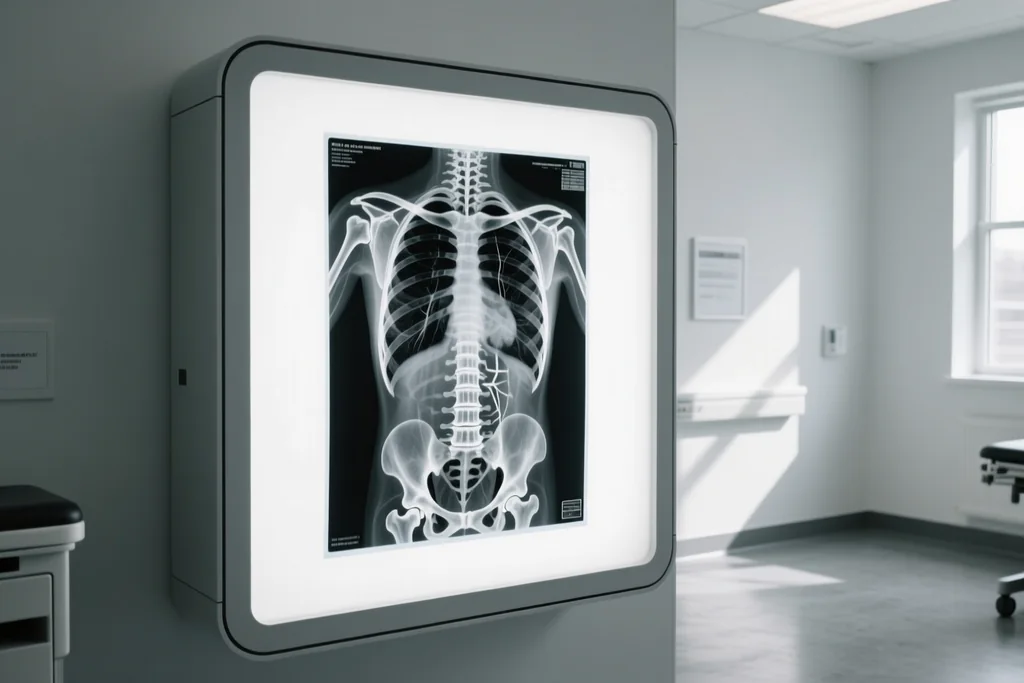
Hamstring strain grades are the shortest way to describe how much muscle has been damaged. Grade 1 means a small number of fibres, grade 2 means a partial tear, and grade 3 means a complete rupture. The grade is decided by clinical examination and confirmed by imaging, usually ultrasound and sometimes MRI, and it sets the first expectation of a recovery window.
For a professional footballer the grade drives three things at once: the likely absence, the shape of the rehabilitation programme, and the risk of the injury coming back. Understanding the grade is the difference between a player who follows a plan and a player who argues with one.
Grade 1 hamstring strain: a small tear with a fast return
A grade 1 injury involves a limited number of fibres with no loss of continuity in the muscle. The player usually feels a sudden tightness or grab, can often continue playing for a short period, and presents the next day with localised soreness and mild discomfort on stretch.
Absence is typically one to two weeks. The risk in this grade is not the injury itself but the temptation to return after three days of feeling better, before the tissue has been loaded at full sprint speed even once.
Hamstring strain grades: grade 2, the middle ground where most football injuries sit
A grade 2 strain is a partial tear. There is a measurable strength deficit, often some bruising, and clear pain on eccentric loading or stretch. The muscle may show a palpable defect in the belly in larger injuries.
Absence usually runs between two and six weeks, with the upper end reserved for injuries involving the musculotendinous junction or the proximal tendon. Rehabilitation must include eccentric loading and progressive sprinting, or the return will not survive contact with a match.

Hamstring tear grades: grade 3, rare, serious and slow
| Grade | Damage | Usual absence | Return criteria |
|---|---|---|---|
| Grade 1 | A few fibres, no loss of continuity | 1-2 weeks | Full-speed sprinting with no discomfort, strength within 10 percent |
| Grade 2 | Partial tear, measurable strength deficit | 2-6 weeks | Pain-free eccentric loading, strength 90 percent as a traditional minimum, full sprint exposure |
| Grade 3 | Complete rupture or proximal avulsion | 3-4 months, longer if surgical | Surgical review, full strength recovery, graded sprint and football work |
A complete rupture of the hamstring is uncommon in football but not unheard of, and a proximal avulsion, where the tendon pulls away from the sit bone, is the version that sometimes requires surgery. Recovery from that is measured in months rather than weeks.
Why the size of the tear is not the only variable
Two grade 2 injuries can behave completely differently. Location matters: damage near the proximal tendon, near the musculotendinous junction or involving the intramuscular tendon takes longer than damage in the middle of the muscle belly. Involvement of a larger cross-section slows things further.
- Ask where the injury sits, not only how big it is.
- Tendon involvement extends the timeline and raises recurrence risk.
- Previous injury at the same site changes the prognosis more than the grade itself.
How the grade is confirmed
Clinical examination provides the working grade: resisted knee flexion, passive stretch, palpation along the muscle and an assessment of gait and running mechanics. Imaging then confirms the extent and, importantly, resolves the tendon question.
Ultrasound is quick and available pitchside in many clubs; MRI gives a clearer picture of deeper structures and of the proximal tendon. Neither changes the first week of treatment, which is about protection and pain control rather than imaging findings.
Grading is a starting point, not a sentence
Players often treat a grade as a fixed verdict. In practice the grade describes tissue on one day, and the rehabilitation response over the following fortnight is at least as informative. A grade 2 injury that settles quickly and tolerates loading well can move faster than a smaller injury that keeps reacting to every increase in effort.
The clinical team watches three things: pain behaviour over the first three sessions, the speed at which the player tolerates progressive stretch, and whether symptoms stay in one place or move around. Those observations shape the plan more than the initial scan.
How the grading conversation should go with a player
A useful explanation covers four things together: what is damaged and where, the usual absence range for that pattern, what the player will be asked to do at each stage and how it will be measured, and what the plan looks like if the injury responds faster or slower than the average case.
Players who understand those points tend to follow the plan, and players who follow the plan tend to avoid the recurrence described in why hamstrings tear again. Grades are useful for the medical team; clarity is what makes them useful to the player.
Grading the return, not just the injury
Grades describe the tissue on the day of the scan. They do not describe how the player will respond to loading, and they do not account for position, sprint volume or the state of the surrounding muscles. Those factors are folded into the return plan described in hamstring recovery time, and into the criteria covered under return to play.
The useful mental model is that the grade sets the starting line and the sprint exposure sets the finishing line.
Information only. This guide is for general information about injuries in professional football and does not replace assessment, diagnosis or treatment by a qualified clinician.
Read next

Hamstring Injury Recovery Time in Football: The Realistic Windows
Most hamstring strains return a player in two to four weeks. The variables that push that to eight, and the markers that say the muscle has healed.
2026-09-25
Calf Injury in Football and Groin Strains: Two Timelines, One Region
Calf and groin problems rarely make the news but they fill the treatment room. Why the return to sprinting is the real milestone.
2026-09-13
Quadriceps Strain in Football: Load, Sprinting and Risk
Kicking, decelerating and changing direction all load the quad and the adductor. What a graded sprint programme looks like for each.
2026-09-07