
Meniscus Injury in Football: Repair, Remove or Wait
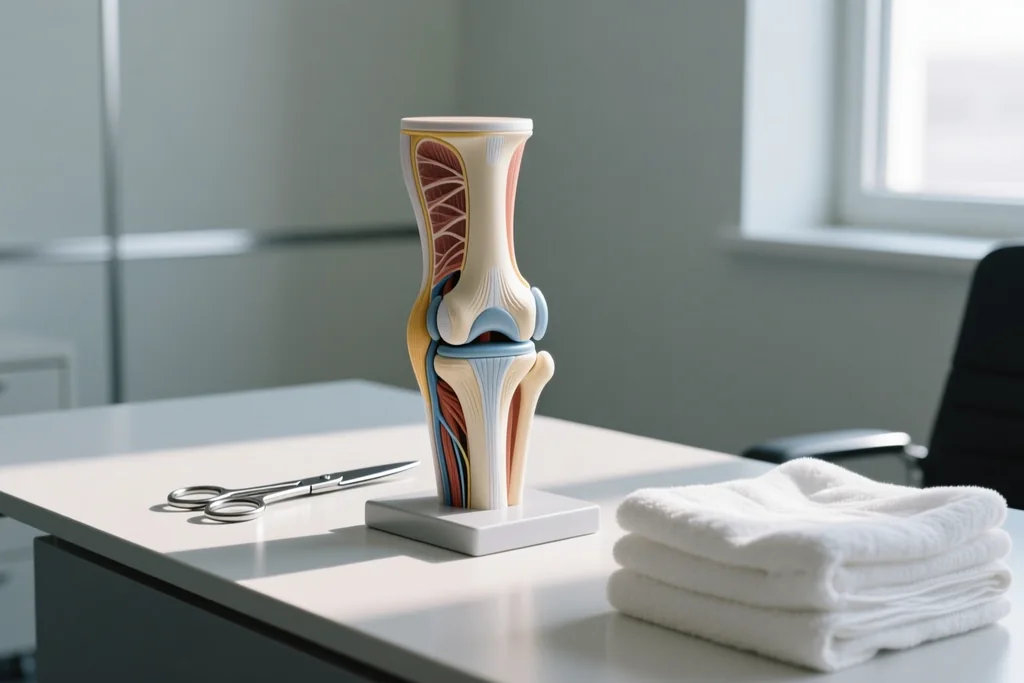
A meniscus injury in football rarely ends a season, but it can quietly decide the next decade of a knee. The menisci are two cartilage wedges that spread load across the joint, and the way a tear is treated changes how much load-bearing surface a player keeps. For a professional, the decision between repair, partial removal and conservative management is a career decision as much as a clinical one.
Cartilage damage on the joint surface is a different problem again, and it is the one that most often explains why a knee keeps swelling years after everything else has settled.
Reading the tear before choosing the treatment
Meniscal tears are described by where they sit, how they run and how stable they are. A tear near the outer rim has blood supply and can heal after repair. A tear in the inner, avascular zone will not heal, which limits the repair option regardless of how much the surgeon would prefer it.
Stable, small tears in a knee without locking are often managed without surgery, at least initially. Mechanical locking, a knee that will not fully straighten, or a large displaced tear point toward an operation.
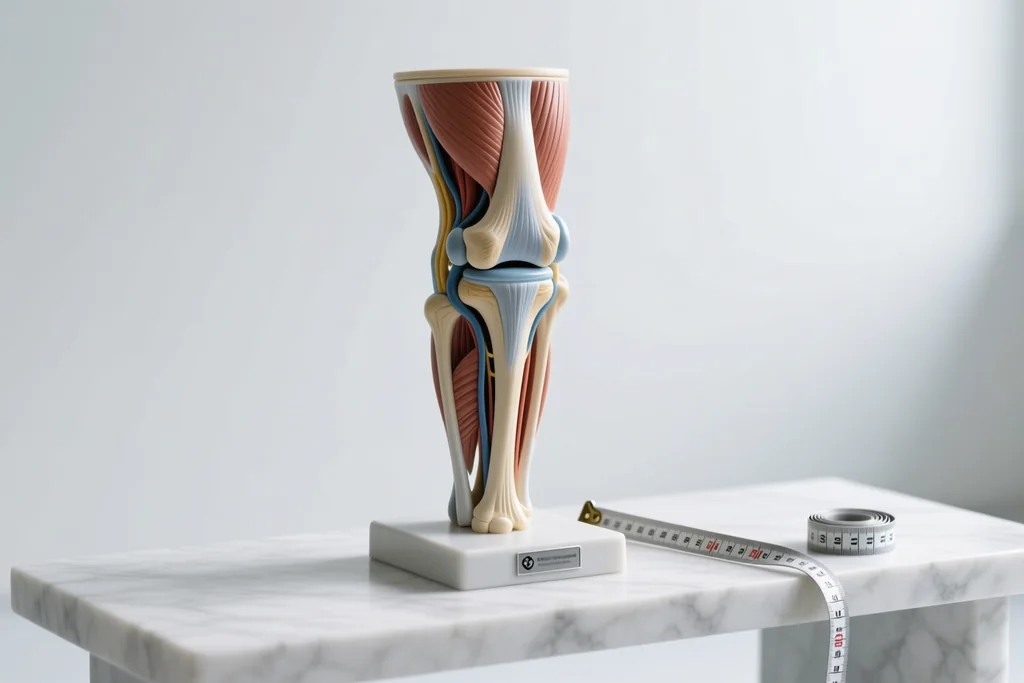
Meniscus tear in football: repair, remove or wait
| Option | Typical absence | Main consideration |
|---|---|---|
| Conservative management | 2-6 weeks | Stable tear, no locking, symptoms settle with rehab |
| Meniscal repair | 3-6 months | Preserves tissue but needs a protected, restricted rehab |
| Partial meniscectomy | 4-8 weeks | Fast return, but less load-bearing surface for the rest of a career |
| Repair plus ACL reconstruction | 6-9 months | Protocol driven by the ligament; meniscus restricts early loading |
Why surgeons now repair more than they used to
Long-term cohort studies have repeatedly linked removal of meniscal tissue to earlier joint degeneration, and the more tissue removed, the stronger the association. That finding shifted practice toward repair in younger patients, even though repair means a longer absence and a stricter protocol.
For a 24-year-old professional with fifteen years of football ahead, saving a millimetre of meniscus is usually worth several extra weeks. For a player at the end of a career, a partial meniscectomy that returns him to the pitch in six weeks may be the more sensible trade.
Cartilage injury in the knee: the quiet variable
Damage to the articular cartilage itself is graded, and full-thickness defects are the hardest to treat. Options include debridement of loose flaps, marrow stimulation techniques, cell-based procedures and, in selected cases, osteochondral transfer. Recovery from these procedures is measured in months, and the outcome is less predictable than an ACL reconstruction.
- Ask about the cartilage surface as well as the meniscus after any knee scan.
- Persistent swelling after training is a more useful warning sign than pain alone.
- Loading programmes are managed carefully, because the joint surface tolerates repetition poorly.
Rehabilitation after a meniscal repair
A repair is protected deliberately. Weight bearing is restricted for a period, deep knee bending is avoided, and loading is progressed in a controlled arc so the repaired tissue is not stretched while it heals. The result is a slower first two months than after a meniscectomy, followed by a similar later phase.
Progress depends on the repair site and on how the surgeon graded the tissue. A peripheral tear in a young player follows a more confident protocol than a complex tear in a knee with existing cartilage wear.
The player's compensation matters as much as the protocol. Losing six weeks of normal loading reduces quadriceps strength, so the strength programme has to be rebuilt deliberately rather than assumed.
- Follow the weight-bearing restriction exactly; early loading is the most common way a repair fails.
- Rebuild quadriceps strength before progressing running volume.
- Plan the return around the full rehabilitation phases rather than the surgical calendar.
- Keep the load-management work going after the return, given the reduced meniscal surface.
When a knee keeps swelling for no obvious reason
Recurrent effusion in a footballer with a meniscal history is a signal worth following up rather than a nuisance to be iced away. It often reflects early joint surface change, altered loading mechanics, or a residual meniscal fragment rather than a new acute injury.
The useful management response is structured: reduce the training elements that provoke the swelling, rebuild quadriceps and posterior chain strength, review the running mechanics, and repeat the imaging if the pattern persists. The player who trains through repeated swelling usually spends more weeks out than the one who adapts the programme early.
This is also the point where long-term planning matters more than the next fixture. A knee with reduced meniscal tissue can hold up for a full career, but it needs the same attention given to a returning ACL: consistent strength work, honest load management and an unwillingness to trade a decade for a month.
What this means for the return plan
A knee that has lost meniscal tissue needs long-term attention to quadriceps strength and load management, not just a return to sport. That work lines up with the principles in training load management, and with the criteria used in return-to-play assessment. The scan decides the surgery; the following decade decides the outcome.
Information only. This guide is for general information about injuries in professional football and does not replace assessment, diagnosis or treatment by a qualified clinician.
Read next
ACL Injury Recovery Time: What Six to Nine Months Really Means
A ruptured ACL costs most professionals six to nine months. Here is what fills that window and why the last two months are the hardest.
2026-09-26
ACL Graft Choice: What Each Option Means for Rehab
Bone-patellar tendon, hamstring tendon or donor tissue: the graft choice shapes the first four months of rehab and the long-term re-injury picture.
2026-09-21
ACL Rehab Phases in Football: The Five Stages, Week by Week
Quad control, walking, running, control-chaos and the return test. The five phases of ACL rehab and the criteria that gate each one.
2026-09-15